
Youth voice isn’t the same as youth power
Many youth employment programmes ask young people what they think. Far fewer can show that anything changed because they said it.

Almost a million young people in the UK, 981,000 aged 16 to 24, are now not in education, employment or training.
The risk isn’t spread evenly. Government analysis finds that having an Education, Health and Care Plan at 16 is the strongest single predictor of becoming NEET later on. So funders are rightly backing youth employment programmes that go beyond CV workshops, and try to change the system around young people.
A project we designed recently was clear about the challenge. Young people already knew what was wrong. Pathways were hard to understand, employer engagement rarely turned into real opportunity, recruitment created needless barriers, and young people were asked for their views without gaining any influence. The programme set out to fix that. The evaluation’s job was to find out whether it did.
That’s harder than it sounds. Most evaluation counts what happens to young people, such as confidence scores, attendance and progression. Far less of it tracks what changes around them, like an employer dropping a restrictive recruitment step, or a careers resource rewritten because a young person challenged it. Youth-led evaluation, done properly, measures both. It treats young people as co-evaluators rather than data points, and asks a sharper question than “were they consulted?” It asks what happened differently because they were there.
What we’re seeing in practice
Attendance isn’t empowerment
A youth panel that meets regularly can still change nothing. The test of youth voice is whether a decision, service, resource or employer practice changed because young people influenced it.
We use a simple log of where their input changed something, and where it was asked for but went nowhere, and we report both.
Employers are part of the intervention
If a programme is trying to make recruitment more inclusive, employers aren’t just partners, they’re one of the things being tested.
That means recording their starting practice, revisiting it each year, and comparing what employers say has changed with what young people actually experience. The two don’t always match, and the gap is often the most useful finding.
The young people we most need to hear from are the easiest to miss
Government risk analysis ties NEET risk most closely to young people with an EHCP, and Youth Futures Foundation research shows risk rises with each extra form of disadvantage.
Participatory evaluation has to adapt to those young people, through trusted staff, familiar settings, one-to-one conversations and visual methods, and deliberately include those who disengaged or said no.
2026
Case study
Escalate Arts, Surrey
Escalate Arts is a multi-partner programme in Spelthorne, led by Surrey County Council with Surrey Libraries, Surrey Arts, Artswork and Spelthorne Borough Council, and backed by industry partners including Shepperton Studios and Netflix. It uses libraries as hubs to open up creative careers and cultural participation for young people who rarely get either.
Always Possible was appointed as evaluation partner, and we built young people into the evaluation from the start rather than consulting them at the end. The Theory of Change was co-designed with young people, library staff and cultural partners. Evidence comes from baseline surveys, observation, creative journaling and youth reflections, alongside partner feedback, and interim learning snapshots go back to delivery teams while there’s still time to act on them.
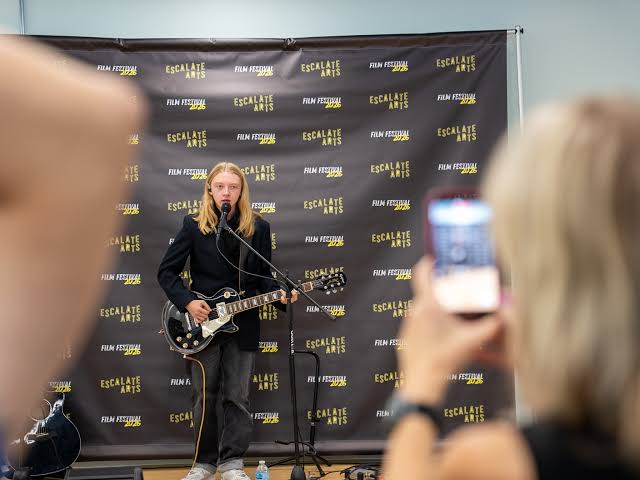
It’s already changing how the programme runs. A Youth Collective now shapes library programming and the evaluation tools themselves. Baseline evidence shows half of participants come from disadvantaged backgrounds, so the programme is reaching the young people it was designed for. Libraries, schools, Surrey Arts and creative industry partners are also working together more consistently, and the evidence base is being used to make the case for further Arts Council and local investment.
92.6%
rated their experience good or excellent
27.9%
had faced a barrier to taking part
65.1%
want to do more creative activity in future
Questions worth asking
Can we name one decision that changed because young people influenced it?
Are we measuring what changes around young people, or only what changes in them?
Who stopped turning up, and have we asked them why?
Will young people see what happened as a result of what they told us?
Talk to us about engagement.
We design youth-led and participatory evaluations that show what changed, for whom and why, from youth employment and skills programmes to cultural and community initiatives across the UK.

More on reaching the right people
-

Three decisions to make before you design a funding programme
Most funding programmes are designed from the application form outwards. The best ones start…
-

Why don’t people use what’s on their doorstep?
Ferries, buses, museums and high streets all face the same puzzle. The people who…
-
Safe spaces aren’t soft spaces
Good stakeholder engagement doesn’t avoid disagreement. It creates safe spaces for difficult conversations, where…